
Speech-Language Therapy
Speech-language therapy addresses difficulties with speech, language, swallowing, cognition, and voice for people of all ages. LMH Health therapists in Lawrence provide individualized evaluation and treatment for conditions such as aphasia, swallowing disorders, and communication challenges following illness or injury.
Table of Contents
Turn to LHM Health in Lawrence, Kansas, for speech-language therapy for all ages. You’ll find expert care for concerns related to speech, language, thinking, and swallowing – so you can feel more confident and connected to the world around you.
Conditions We Treat
Speech-language therapy can help you or your child with:
- Cognition and memory problems – Trouble thinking, remembering, or paying attention
- Language problems, including aphasia – Trouble understanding or communicating through speaking or writing
- Review your health history
- Ask about your strengths, challenges and goals
- Examine your mouth
- Check your ability to understand and respond to speech (cognitive communication)
Assess your language, speech and/or swallowing abilitiesSpeech problems – Difficulty making sounds or words
- Articulation disorders – Problems with pronunciation
- Fluency disorders, including stuttering – Problems speaking smoothly, without interruption or sound repetition
- Voice disorders – Abnormal voice quality, volume or pitch
- Swallowing problems (dysphagia) – Difficulty eating or drinking
Patient-Centered Care
Enjoy one-on-one attention from a licensed speech-language pathologist (SLP) who cares about your well-being and progress. Expect your SLP to use his or her expertise to diagnose your condition and create a care plan specific to your needs.
Your First Appointment
Your first appointment with an LMH Health SLP includes a thorough evaluation. Depending on the reason for your visit, your SLP may:
- Review your health history
- Ask about your strengths, challenges and goals
- Examine your mouth
- Check your ability to understand and respond to speech (cognitive communication)
- Assess your language, speech and/or swallowing abilities
Then you’ll work together to develop your treatment plan.
Expect your first appointment to last 45 to 60 minutes.
Services
Access a wide range of diagnostic tools and treatment options, including:
- Aphasia group – Offers ways to improve listening and speaking skills in a small group
- Cognitive rehabilitation therapy – Helps you build or relearn cognitive skills, such as learning, remembering, and paying attention
- Modified barium swallowing study – Examines how your mouth, throat, and upper esophagus work as you swallow
- Speech-generating devices (SGDs) – Say letters, words or messages you select
- Speech therapy – Uses activities and oral exercises to help you improve your ability to speak and make certain sounds
- Swallowing therapy – Makes swallowing safer and easier by adjusting your position and/or helping you improve strength or coordination
- VitalStim
®Therapy – Uses mild electrical impulses to strengthen the muscles you use to speak and swallow -
- LSVT LOUD
®– Helps people with Parkinson’s disease and other neurological conditions use a strong voice to speakVoice therapy – Helps you produce better-quality sounds with less discomfort
- LSVT LOUD

Other Services
Low Vision Therapy
Rehabilitation for permanent vision loss that affects daily tasks
Physical & Occupational Therapy
Physical and occupational therapy for orthopedic injury and recovery
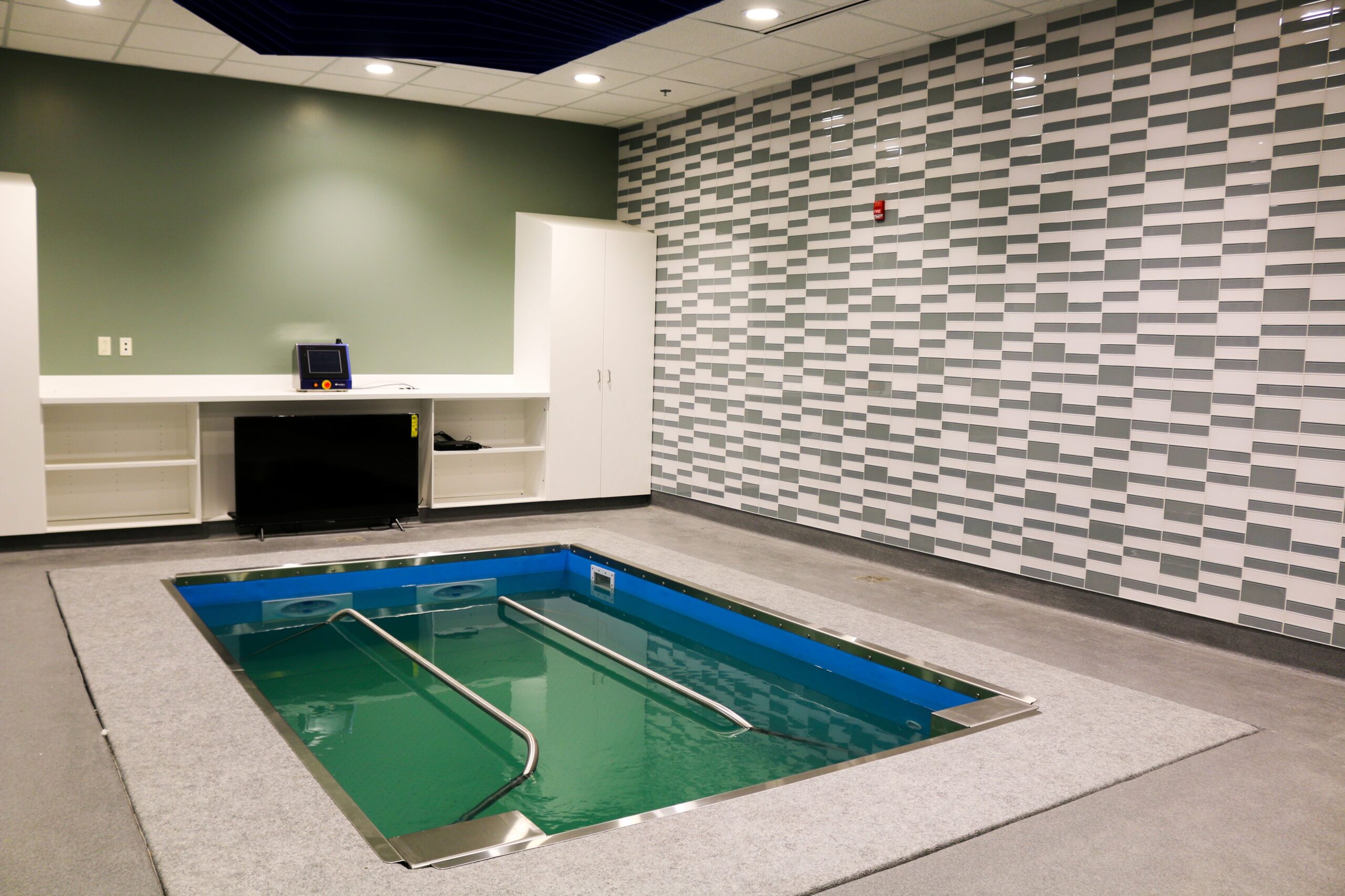
Aquatic Therapy
Water-based physical therapy for injuries, arthritis, and chronic pain
Physical Therapy
Physical therapy for pain, injury recovery, and movement conditions

Balance and Dizziness Therapy
Vestibular therapy for vertigo, dizziness, and balance disorders
Occupational Therapy
Therapy to restore independence in daily activities for all ages


Pediatric Therapy
Physical, occupational, and speech therapy for children of all ages