
Bronchoscopy
Hearing you need a bronchoscopy may cause you to worry, especially if it follows an abnormal low-dose CT scan or other lung screening. It’s natural to wonder what to expect and what your results might mean.
While an abnormal finding deserves further evaluation, many lung nodules and other areas of concern are ultimately found to be noncancerous. A bronchoscopy helps your care team learn more about what’s causing your finding or symptoms, so they can recommend the right next steps for you.
Table of Contents
What is a bronchoscopy?
A bronchoscopy is a minimally invasive procedure that allows a pulmonologist to look inside your airways and lungs using a thin, flexible tube called a bronchoscope. The bronchoscope has a tiny camera that provides detailed images of areas that cannot be seen with standard imaging tests like X-rays and CT scans alone.
During the procedure, your pulmonologist may also collect small samples of tissue or fluid to help diagnose lung conditions, identify infection or inflammation, or determine whether a suspicious finding requires treatment. This is known as a biopsy.
Why you might need a bronchoscopy
While CT scans are excellent at detecting abnormalities, they can’t always determine exactly what the abnormality is. For many patients, a bronchoscopy is the next step after a lung screening identifies an area that needs a closer look.
Your healthcare practitioner may recommend a bronchoscopy if you have:
- A suspicious finding on a CT scan or chest X-ray
- A persistent cough that has not improved
- Instances of coughing up blood
- Ongoing shortness of breath or wheezing
- A suspected lung infection or inflammation
- A blockage in one of your airways
If a biopsy is recommended, bronchoscopy offers a way to obtain answers without lung surgery.
The advantages of Ion™ robotic bronchoscopy
Some lung nodules are extremely small or located deep within the lungs, making them difficult to reach with traditional bronchoscopy. For appropriate patients, LMH Health offers Ion robotic bronchoscopy, which is advanced technology designed to help pulmonologists navigate to these hard-to-reach areas with precision.
As an alternative to more complex and invasive lung biopsies, Ion robotic bronchoscopies support early diagnosis and treatment of lung conditions, including lung cancer.
How it works
Using robotic-assisted navigation, your pulmonologist can guide a thin, highly maneuverable catheter through the lungs to reach suspicious nodules. Once the area is reached, tissue samples can often be collected during the same minimally invasive procedure.
For patients, that may mean:
- Earlier diagnosis of lung conditions
- Lower risk of complications from accessing hard-to-reach nodules
- Less discomfort and downtime
- Faster treatment planning when additional care is needed
For the community, from the community
As your partner for lifelong health, LMH Health is committed to bringing advanced diagnostic technology to those we serve. The purchase of the Ion robotic bronchoscopy system was made possible in part through the generous support of LMH Health Foundation donors, helping to expand local access to advanced options for lung cancer diagnosis.
And, because we believe cost shouldn’t stand in the way of receiving recommended care, the LMH Health Foundation may be able to provide financial assistance for eligible patients if cost is a barrier to receiving a bronchoscopy.
What to expect at your bronchoscopy
Bronchoscopies are typically performed as outpatient procedures, which means most patients go home the same day. We perform each procedure in our state-of-the-art endoscopy suite at the LMH Health Main Campus.
Although every patient is different, bronchoscopies usually follow the same general process:
- Before the procedure begins, you will be given a sedative to help you sleep comfortably. Standard bronchoscopies can be done under moderate sedation. More complex bronchoscopies – such as those requiring ultrasound or needle biopsy technology – will be done under general anesthesia.
- Your care team will closely monitor your breathing and heart rate before, during and after the procedure.
- Your pulmonologist will gently guide the bronchoscope through your mouth and into your airways. If needed, your pulmonologist will collect biopsy samples to help diagnose or rule out conditions such as infection, inflammation and lung cancer.
- Depending on the type of bronchoscopy you are having, your procedure will take anywhere from 15 to 90 minutes. To allow for registration, preparation and recovery in addition to the procedure, please plan to be here for around 5 hours.
- After the procedure, you’ll be taken to our recovery area while the sedation wears off. Because sedation can affect alertness, you will need someone to drive you home.
- You may experience mild throat soreness, hoarseness, or a cough for a day or two. Some patients may notice a small amount of blood-tinged mucus after a biopsy, which is often expected. Your healthcare team will let you know when it’s safe to eat, drink and resume your normal activities.
If you develop a fever or your symptoms worsen, contact your healthcare practitioner as soon as possible. If you experience chest pain, heavy bleeding or difficulty breathing, call 911 or go to your nearest emergency room immediately.
What happens after a bronchoscopy
If your pulmonologist collected tissue samples during the bronchoscopy, those samples will be sent to a laboratory for analysis. Your care team will contact you when the biopsy results are available (typically 3 to 5 business days) to go over them with you, answer your questions and explain your next steps. Office visits to discuss the results are also available.
Depending on the findings, your next steps may include:
- No additional treatment if the finding is benign
- Continued monitoring with follow-up imaging
- Additional testing
- A personalized treatment plan developed with specialists across LMH Health – for example, a referral to cancer specialists
You don’t have to navigate the process alone
With advanced diagnostic procedures like Ion robotic bronchoscopy and our comprehensive lung nodule evaluation program, the experts at Lawrence Pulmonary Specialists provide accurate diagnosis and personalized care.
Whether you’ve been referred after an imaging test or you’re meeting with a pulmonologist to discuss your options, we are here for you.
Frequently asked questions
How should I prepare for a bronchoscopy?
Your care team will provide detailed instructions before your procedure. In general, you may be asked to:
- Avoid eating or drinking for 12 hours before your bronchoscopy.
- Temporarily stop taking certain medications, such as blood thinners – but only if instructed to do so by your healthcare practitioner.
- Arrange for someone to drive you home afterward.
- Share any allergies, medical conditions and current medications with your care team.
If you have questions, contact us at 785-505-3205.
Will I be asleep during the bronchoscopy?
Many bronchoscopies are performed using sedation, so patients remain relaxed and comfortable throughout the procedure. Simpler procedures require only moderate sedation, while more complex bronchoscopies will require general anesthesia. Your pulmonologist will discuss the type of sedation that’s most appropriate for your situation before your procedure.
Is robotic bronchoscopy safer than surgery?
Every patient’s situation is unique. When a biopsy is needed, your pulmonologist will recommend the approach that offers the greatest benefit based on the size and location of the lung nodule, your overall health and other individual factors.
For many patients, robotic bronchoscopy provides a modern option that may help avoid more invasive diagnostic procedures.
Does needing a bronchoscopy mean I have lung cancer?
No. A bronchoscopy is a diagnostic procedure, not a diagnosis. Many people need a bronchoscopy because a CT scan or other imaging test identified something that needs a closer look. While some findings are cancerous, many are caused by previous infections, inflammation or other noncancerous conditions.
A bronchoscopy helps your pulmonologist determine exactly what’s causing the abnormality and develop the most appropriate treatment plan for you.
For referring physicians
To refer a patient to our lung nodule program for bronchoscopy and multidisciplinary evaluation, call 785-505-3205 or send a referral to Lawrence Pulmonary Specialists. We will contact the patient promptly for scheduling.
If you have questions about the program, please call Mo Houk, RN, pulmonary nurse, at 785-505-3201.
Meet Our Care Team
Vance Burns, MD
Pulmonology
Medicine wasn’t always the career path that Vance Burns thought he’d follow, but whatever he did, he wanted to be in a career where he met people.
“I grew up on a farm and I wanted to work in a field where I could combine meeting people with fixing things. I am blending science, humanities and the arts, and I want to stay connected to people and patients. Those connections are important.”
Dr. Burns was serving in the United States Air Force on September 11, 2001, and was soon deployed overseas. That experience helped solidify his interest in pulmonology.
"During that time, I was working as an internal medicine doctor. Part of that was running ventilators and life support, working with combat wounded and critically ill people. After I got home, I pursued a fellowship in pulmonary and critical care at the University of Kansas.”
Why should patients get care at LMH Health? Dr. Burns said that’s easy – it's a health system where your providers know you.
“As a patient, I want to go someplace where they know me by memory, not what’s typed on my chart. LMH Health is just the right size. When there’s a place that’s too big, you start to lose connections. It it’s too small, you start to lose technical ability. LMH is just the right mix of both.”

Sonia M. Castillo, MD, FCCP
Pulmonology
“I’ve never thought of anything else other than being a physician. Even as a little girl, playing with my dolls and I had a clinic I named ‘The Little Corner.’ I’ve always wanted to care for people.”
Dr. Sonia Castillo was born and raised in Nicaragua. She earned her medical degree from the Universidad Nacional Autonoma de Nicaragua before completing an internal medicine residency and a pulmonary/critical care fellowship at the University of Kansas Medical Center.
She pursued pulmonology during her residency after seeing the pulmonary and critical care program firsthand.
“The physicians in the pulmonary program are compassionate and treat patients as a whole. Seeing that modeled and evaluating patients holistically is what really attracted me to pulmonology.”
Dr. Castillo treats patients living with a variety of pulmonary diseases, from the most common such as emphysema, COPD and asthma to less frequent ones.
“I thrive with procedures, and I love explaining to patients what we’re walking into and what we’ll do with the results. I also love working with point of care ultrasound. With new technology, we can do those right at the bedside and show patients what you’re seeing.”
What should patients expect from Dr. Castillo? It’s important that they know she wants to meet them where they are.
“First appointments can be nerve-wracking, because you don’t know how it’s going to go. This is going to be a long-term relationship, and I genuinely care about my patients. I want to get to know you, your family and make sure you feel that you’ve been heard. I’m here to help and provide you the best care I can.”
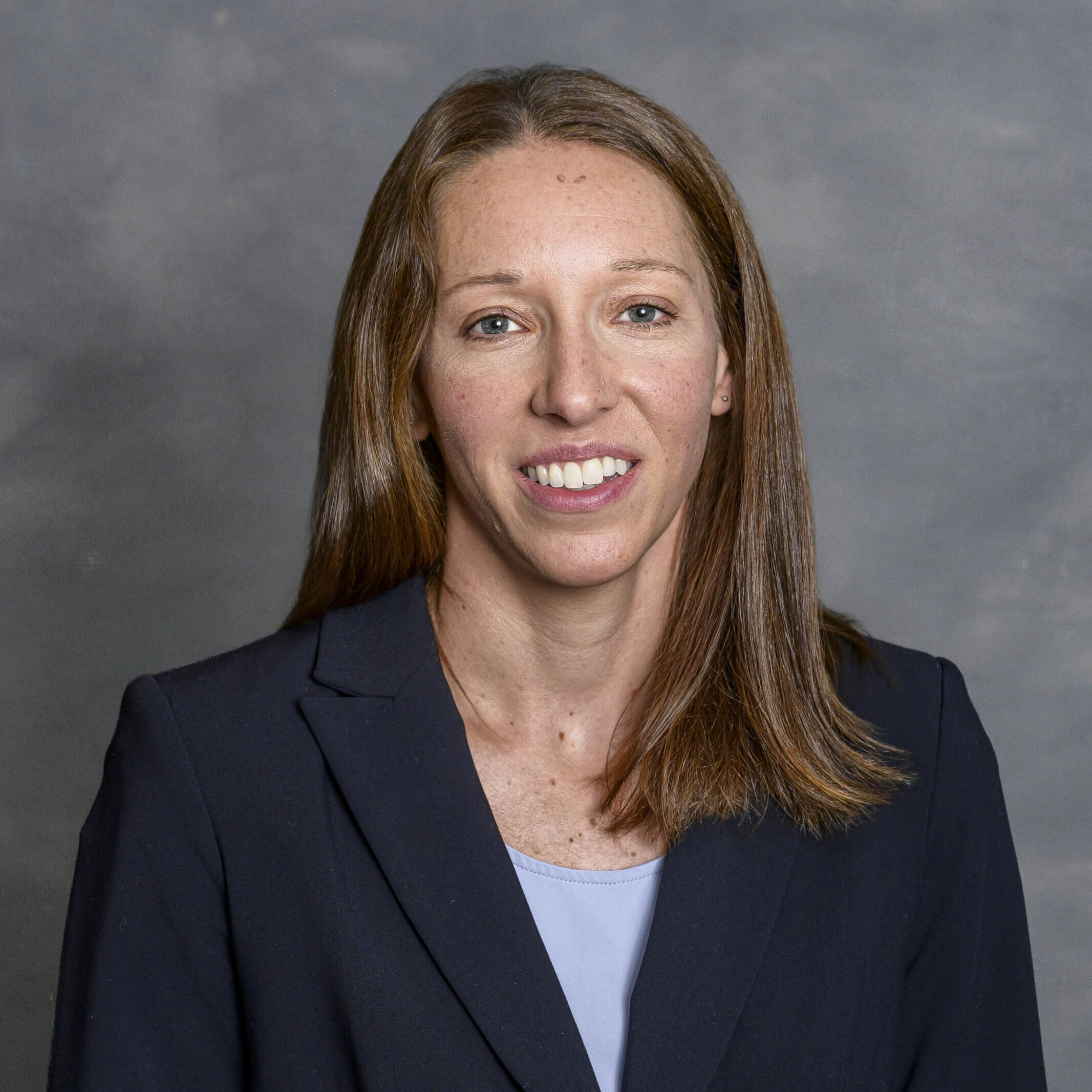
Clarissa "Claire" Smith, MD
Pulmonology
Dr. Clarissa (Claire) Smith earned undergraduate degrees in clinical laboratory science and orchestral instruments from the University of Kansas and her medical degree from the University of Kansas School of Medicine. Dr. Smith completed an internal medicine residency at the University of Kansas Health System and a pulmonary and critical care fellowship at the University of Chicago.
Other Services

Wound Healing Center
Advanced care for chronic non-healing wounds and diabetic ulcers
Gastroenterology
Diagnosis and treatment of digestive and gastrointestinal disorders
Palliative Support Services
Symptom relief and comfort care for patients with serious illness
Heart & Vascular Care
Cardiology for heart disease, arrhythmias, and vascular conditions
Lung Cancer Screening
At higher risk? Ask about a noninvasive imaging test. Learn more.