Mammograms: The first line of defense against breast cancer
Breast cancer affects about one in eight women during their lifetime. It’s also the most common cancer in women in the U.S. besides skin cancer.
When it comes to finding breast cancer early, a mammogram is your first line of defense.
Mammograms are digital images of the breast used to detect abnormalities in breast tissue. LMH Health uses 3D mammography, which captures multiple images from different angles around the breast and combines them into a detailed three-dimensional view. This allows radiologists to examine breast tissue layer by layer to reveal fine details, reducing the number of abnormal or unclear mammograms and identifying invasive forms of breast cancer more often when compared to traditional 2D imaging.
It’s normal to feel nervous about a mammogram, whether you’re worried about discomfort or an unexpected finding. But for most patients, the experience is quick, involves minimal discomfort and provides valuable information about your health.
“Most patients say they only had minimal discomfort during their mammogram,” said Dr. Jodie Barr, an oncologist at the LMH Health Cancer Center. “Breast cancer is a treatable disease and patients have better outcomes when we’re able to detect it at an earlier stage.”
When should I get screened?
Women at average risk of breast cancer should begin mammogram screening at age 40, according to the latest recommendations from the American Cancer Society, National Comprehensive Cancer Network and the U.S. Preventive Services Task Force (USPSTF). If you have a family history of breast cancer, it’s important to speak with your doctor to see if you should start sooner.
Before a routine screening mammogram, patients work one-on-one with a mammography technologist to complete a comprehensive breast cancer risk assessment and calculate your lifetime risk of breast cancer.
A lifetime risk of 20% or higher is considered high risk. If your score is 20% or more, you may receive a referral to LMH Health’s High-Risk Breast program. This collaborative team from Lawrence Breast Specialists and the LMH Health Cancer Center then creates an individualized screening plan based on your level of risk.
What if you find something on my scan?
After your mammogram is complete, a radiologist reads the images, looking for any abnormalities. If everything looks fine, you’ll get a letter from LMH Health reminding you to come back in a year for a regular screening mammogram. But if the radiologist sees something concerning, you’ll receive a call from the clinic. The next step may be a diagnostic ultrasound.
When you hear about an ultrasound, you might think of someone getting a scan to confirm a pregnancy. A breast ultrasound does essentially the same thing, using high-frequency sound waves to take images of the tissues and structures inside the breast.
An ultrasound technician applies a clear gel to a handheld device and moves it around the breast to get the images they need. The exam typically takes about half an hour. Once it’s complete, a radiologist reviews and interprets the images and your physician will determine if additional testing is needed.
“Most insurance companies cover screening mammograms. If we see something on those images and determine you need to have an ultrasound, they cover those costs as well,” Dr. Barr said. “It’s important to check with your insurance provider regarding your plan.”
At LMH Health, our goal is to ensure that everyone age 40 and older has access to regular screening mammograms and diagnostic mammograms when necessary. This includes providing financial assistance for patients who are uninsured or underinsured. To learn how to receive a voucher to cover the cost of your mammogram, call 785-505-5782.
Comprehensive cancer care at LMH Health
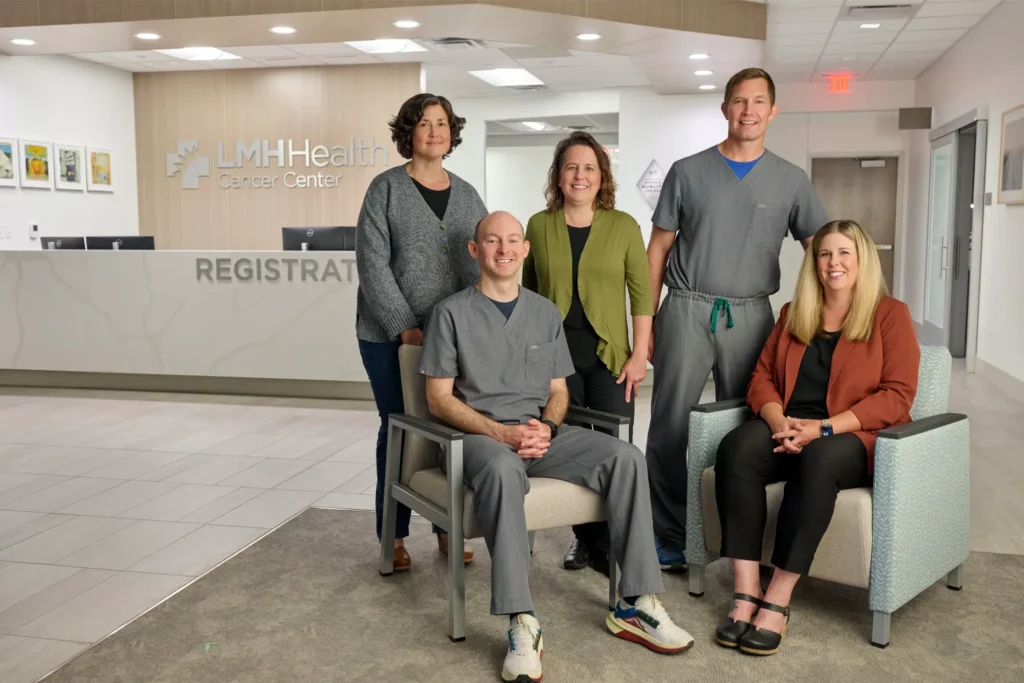
If you find yourself facing this disease, the team at the LMH Health Cancer Center is here to help.
The Cancer Center has been accredited by the National Accreditation Program for Breast Cancers (NAPBC) and the Commission on Cancer (CoC). These accreditations recognize LMH Health’s commitment to patient-centered care and multidisciplinary approach to treat cancer.
“Our entire team works together to provide evidence-based cancer treatment for all of our patients. From our nurse navigators, research nurse, radiation and medical oncology, surgery, occupational therapy – it takes a village to make sure that you’re getting great, comprehensive care. That’s what you’ll find at LMH Health,” Dr. Barr said.
Autumn Bishop is the strategic communications manager at LMH Health.
Ready to schedule your mammogram?
Mammograms are available at the LMH Health West Campus, located at 6265 Rock Chalk Drive. Call 785-505-3300 to schedule. Walk-in appointments are also available from 8 a.m. to 3 p.m., Monday through Friday.
For media inquiries related to LMH Health contact:
Autumn Bishop – Strategic Communications Manager